
FY 2025-26 was a year in which MBL’s progress gathered pace. The Company delivered double-digit growth across key financial metrics, crossed 1,000 stores, strengthened digital commerce and widened its relevance across lifestyle, comfort, value, sport and athleisure. The launch of MetroActiv, the introduction of Clarks and continued progress across FILA, Foot Locker and New Era further expanded the platform for long-term growth.

In the following pages, Ms. Farah Malik Bhanji, Managing Director;
Mr. Nissan Joseph, Chief Executive Officer; and Ms. Alisha Rafique Malik, Whole-time Director and President, reflect on the year’s performance, key strategic developments and the opportunities ahead.

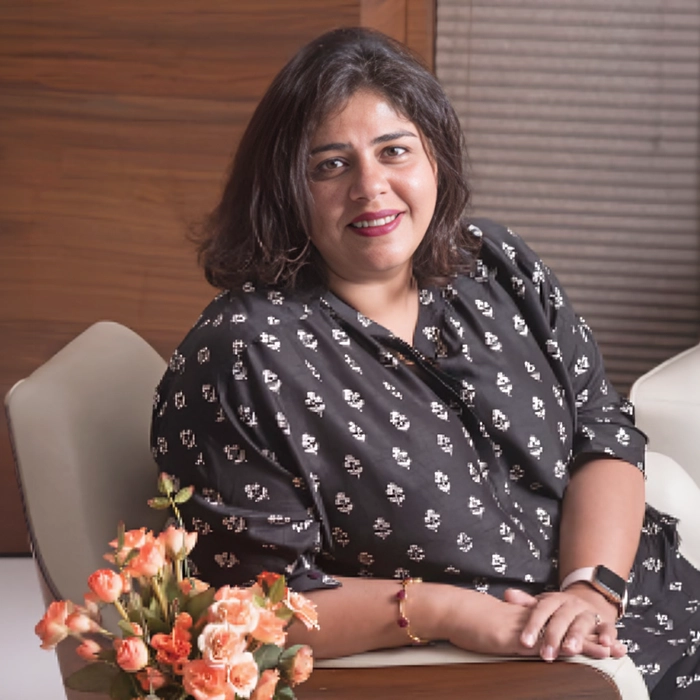
Farah Malik Bhanji: FY 2025-26 demonstrated the resilience of our business and the strength of our execution. Consolidated revenue from operations grew by 14.2% to ₹ 2,864 crores, EBITDA increased by 14.5% to ₹ 869 crores, and profit after tax rose by 17.3% to ₹ 416 crores. EBITDA margin remained healthy at 30.3%, even as we continued investing in stores, marketing, technology and newer formats.
The quarterly progression reflects the momentum built through the year. Revenue growth accelerated from 9% in Q1 to 11% in Q2, 15% in Q3 and 20% in Q4. The year began at a measured pace, with the early monsoon affecting customer movement in some of our key markets. Thereafter, footfalls improved, supported by stronger festive and wedding-season demand and the positive impact of GST reductions on consumer sentiment.
This improvement was complemented by growth across our established formats, disciplined store expansion and increasing traction in digital commerce. Our ability to capture improving demand while preserving margins and maintaining financial discipline was a defining aspect of the year’s performance.
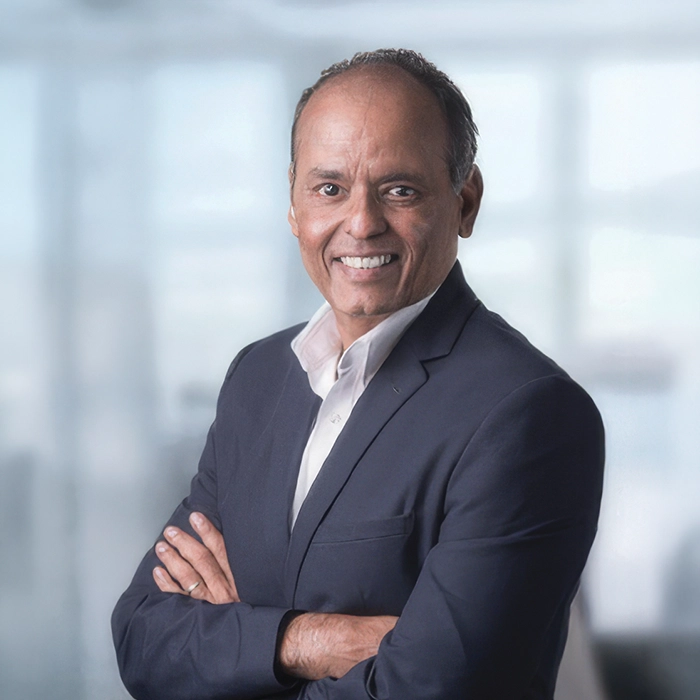
Nissan Joseph: During FY 2025-26, we opened 147 stores and closed 23, resulting in 124 net additions and taking our year-end network to 1,032 stores. Crossing the 1,000-store mark reflects the depth and versatility of the platform we have built. The milestone was achieved across store formats, regions and city tiers, spanning our established and newer concepts as well as premium and value segments. With 33 net store additions, Walkway saw particularly strong expansion during the year as we began scaling the refined format for aspirational, value-conscious consumers, especially across Tier 2 markets.
Our next phase of expansion will continue to follow a three-pronged strategy. First, we will strengthen successful clusters by opening same-format stores at appropriate distances without materially cannibalising the existing network. Second, we will backfill established cities by introducing complementary formats where we already understand the market and customer. Third, we will enter newer cities to broaden our reach. In a new market, we generally begin with Metro and progressively introduce formats such as Mochi, Crocs or Walkway as our understanding of local demand deepens.
This approach allows us to grow with greater precision rather than pursue a predetermined store count. Every opportunity is evaluated against customer demand, site quality, rental economics and its ability to generate sustainable returns. The breadth of our portfolio gives us considerable runway, but financial discipline will continue to determine the pace and quality of expansion.
Nissan Joseph: Every opportunity begins with the customer. We first assess whether a brand addresses a meaningful consumer need and adds something distinct to our existing portfolio. We then evaluate whether our retail reach, local market understanding and operating capabilities can help build that brand more effectively in India.
Clarks met both criteria. We were already familiar with the brand through its presence in Metro and Mochi stores and understood the relevance of its comfort-led proposition. Its global heritage, premium positioning and strength in women’s footwear complement our focus on casualisation and premiumisation.
During the year, we launched Clarks online and introduced its Cloudsteppers range through our Metro and Mochi network, where the initial consumer response was encouraging. We are following a phased approach, with the wider assortment and exclusive stores to be introduced after the product range and supply chain stabilise.
This is consistent with the way we approach every partnership. The objective is to develop brands patiently, protect their identity and build a commercially sustainable business around them.

Alisha Rafique Malik: MetroActiv marks our entry into dedicated sports-performance retail. The consumer in this category is becoming more informed and specific. A runner, a walker and someone training for a particular sport may each require a different product-fit and level of technical guidance. MetroActiv has been designed around these needs.
The format brings together leading global brands such as Nike, adidas, Puma, ASICS, Skechers, New Balance, FILA and New Era. Its assortment spans running, walking and specialised sports, supported by apparel and accessories that help create a more complete performance proposition.
During FY 2025-26, we launched three MetroActiv stores in Indore, Dehradun and Jodhpur, along with a dedicated e-commerce platform. These locations allow us to test the concept across different consumer markets, refine the assortment and strengthen the service model before scaling further.
Alisha Rafique Malik: We continue to see sports and athleisure as a significant long-term opportunity, but the different businesses within the portfolio are at different stages of development. During FY 2025-26, our focus was therefore not on scaling every format at the same pace. It was on building clear propositions, strengthening merchandise availability and learning how Indian consumers respond to each concept.
MetroActiv was an important step in that direction. We launched the format to serve consumers seeking performance-led footwear and sportswear across running, walking and specialised sports. The first three stores opened in Indore, Dehradun and Jodhpur, supported by the launch of metroactiv.com. This gives us an owned multi-brand platform through which we can serve the performance consumer more directly.
At the same time, Foot Locker and New Era allowed us to deepen our presence in sneaker and sport-inspired lifestyle categories. Foot Locker expanded to six stores, although we remained cautious on further rollout because BIS-related supply constraints continued to affect merchandise availability. New Era progressed to four stores and five kiosks, supported by its dedicated online platform.
FILA required a different approach because we are rebuilding the proposition for the Indian market. We continued sharpening its assortment and pricing architecture, while developing local manufacturing capabilities in response to BIS requirements. After testing the products through our existing network, we opened two new FILA stores during the final quarter.
Overall, the year helped us establish a stronger foundation across performance, sneaker culture and sport-inspired fashion. The opportunity is significant, but we want to scale each business only after the merchandise, supply chain and consumer proposition are firmly in place. That discipline will remain central to how we build the portfolio from here.
Alisha Rafique Malik: E-commerce revenue grew by 39% during the year and contributed 12.9% of overall revenue. Growth accelerated further during the final quarter, when the channel expanded by 53%. This performance was supported by stronger execution across marketplaces, our direct-to-consumer platforms, digital marketing and omni-channel fulfilment.
Leading marketplaces continue to account for a significant part of our online business because they provide scale, discovery and access to customers across the country. At the same time, our brand websites allow us to present a wider assortment, communicate each brand’s identity more clearly and build a closer relationship with customers.
Our stores and digital channels are increasingly operating as one connected network. A dedicated warehouse management system integrates online platforms with store inventory, improving visibility and fulfilment.
The way people search is changing rapidly. Discovery now takes place across social media, marketplaces, conventional search engines and AI-led platforms. We are therefore strengthening product content, search visibility and data-led engagement so that our brands remain easy to find wherever the customer journey begins.
Alisha Rafique Malik: At MBL, technology is not an end in itself. Our focus is on using data, AI and digital capabilities to improve decision-making across merchandising, store expansion and customer engagement, while increasing the speed and consistency of execution.
Inventory management is one of our key focus areas. We are using AI- and machine-learning-based planning to strengthen demand forecasting, initial allocation and replenishment—helping us place the right products in the right stores, respond more effectively to demand signals, and improve product availability while reducing the risk of excess and ageing inventory. As our portfolio and store network expand, data-led planning becomes increasingly important in managing complexity at scale.
We are applying a similar data-led approach to store expansion. Location-intelligence capabilities give us insights into catchments, demographics, competition and the potential of proposed locations, complementing the experience and judgement of our business development teams and enabling a more structured, data-informed evaluation of opportunities before capital is committed.
Digital commerce remains an important part of this journey. We continue to invest in our direct-to-consumer platforms, marketplace integrations and omnichannel capabilities so that customers can engage with our brands across physical and digital touchpoints. In parallel, we are strengthening our CRM, Customer Data Platform and enterprise data capabilities, creating a stronger foundation to apply AI and analytics to better understand customer behaviour, improve segmentation and make our engagement increasingly relevant and personalised.
We also recognise that the value of AI depends on adoption by our people. We are building employee awareness and capabilities, providing access to appropriate AI tools for different business needs, and developing selected in-house AI assistants to simplify internal workflows. These initiatives are at different stages of maturity, and we are scaling them in a measured manner with appropriate governance and security controls.
Our objective is to build a scalable, data-led and digitally enabled organisation that can make faster, better-informed decisions, execute more consistently and support MBL’s next phase of growth.
Farah Malik Bhanji: Our footwear recycling programme continued to scale during FY 2025-26. We processed approximately 4,892 tonnes of old and discarded footwear, equivalent to nearly 12.5 million pairs, through environmentally responsible channels.
The collected footwear is segregated by material. Recoverable materials are directed towards recycling, while completely worn-out components are co-processed as an alternative fuel in cement kilns or power-generation facilities. We also sustained our long-term objective of recycling at least one pair for every pair sold, which we achieved ahead of schedule.
Our responsibility extends to the communities connected with our business. During the year, our initiatives supported employability through apprenticeship programmes, access to education, improvements in rural school infrastructure, preventive healthcare and paediatric cardiac care. Our rural development efforts also covered orchard development, farmer livelihoods and water conservation.
These interventions are designed around practical needs and measurable outcomes. We remain focused on programmes where our resources, partnerships and operating reach can create sustained value.